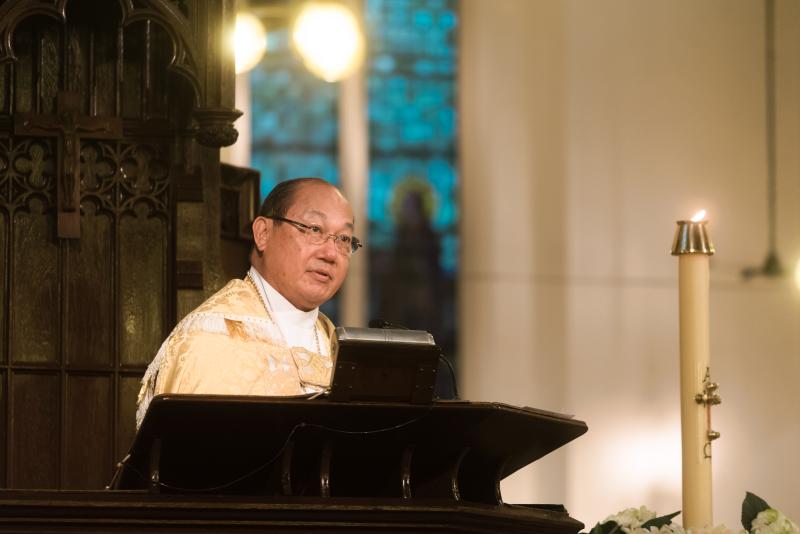
【时代论坛讯】香港圣公会教省主教长邝保罗回函英国圣公会报章Church Times,表明欢迎订立《港区国安法》(下称《国安法》),认为该法例有助在香港日渐恶化的暴力中重建法治与秩序(restore law and order),「我欢迎此法例,虽然我希望这并非必要。」他又批评英国提供居留权和美国变更香港特殊地位的做法,并呼吁海外国家停止插手干预。他又以澳门为例,指《国安法 》不会影响宗教自由,形容圣公会仍能进行崇拜、查经、祈祷会等,相信反对《国安法》的宗教领袖只是少数。
本报就报道联络圣公会教省秘书长管浩鸣牧师,他指出此信是邝保罗回覆Church Times查询《港区国安法》的信件,同时邝保罗亦有致函予一些英国圣公会主教讨论对《港区国安法》的查询。管浩鸣亦表示认同邝保罗的说法,指虽然他希望这并非必要,但他相信《国安法》不会如外界所渲染般恐怖,社会各界可慢慢适应。管浩鸣表现阶段他不会就《国安法》这类敏感议题作回应,而他又相信面对现时香港社会的撕裂,日后教会亦有一定修和工作需要进行。
Church Times于七月十日的报道,公开邝保罗回覆该报的信件。邝保罗在信中认为自反送中运动以来的社会不稳,转化成针对警察、特区政府、中央政府的暴力,衍生出暴徒攻击异见者或破坏亲政府建筑的行为,表示自己支持和平表达意见,但否定暴力以及反中国的政治立场。因此,邝保罗表示《国安法》对于维护港人的福祉(well-being)是必须的,他希望该法能够恢复香港的法律和秩序。
呼吁外国势力停止干涉 为生活在中国感骄傲
邝保罗提到有示威者举起英国旗和美国旗,宣传香港独立,邀请外国势力介入,他形容这些行为在任何社会都不被允许。他表示自己的立场和西方国家的或有对立,但他相信实施《国安法》是对香港最好的选择,故希望外国不去干涉并理解他们。他批评美国变更香港的特殊贸易地位,或英国提供居留权的做法,是损害香港并支持暴力示威者的做法,不能体现基督教的美善,更是反中国情绪的表达。
他认为许多批评者只重视「两制」而忽略「一国」,不愿接受香港作为中国的一部份。他指自己为「能生活在中国感到骄傲」(I am also proud to be living in China)。
邝保罗指英国美国常被塑造成香港的保卫者和救赎者,而中国被塑造成邪恶的一方。他认为中国一直都在帮助香港,他写到:「我们是中国的一部份;我们依靠中国,而且从中国得着好处。我们各方面都得着好处,包括贸易地位、粮食供应、公用事业,以及于中国政体中的特殊优越地位。」(We are part of China; we are dependent on China, and we benefit from China. We benefit in everything — from our trading status, to our supply of food and utilities, to our special and preferential place within the broader Chinese polity.)他又提到中国的大湾区计划在未来将给予香港巨大的利益。
宗教自由不受限制
邝保罗又提到《国安法》不会影响宗教自由,指过去香港圣公会依然能够继续崇拜、教育工作、社会工作、神学训练等,而澳门的圣公会在当地的国安法之下亦未被削减宗教自由。然而,Church Times 在其报道中引述天主教缅甸籍司铎级枢机主教貌波,指出在过往沉重的经验中,当整体的自由受到影响,宗教信仰的自由亦迟早会被干预,认为国安法将会规管宗教自由,要求中国政府不因主教和牧师的讲道而拘捕他们。
邝保罗的回覆Church Times的英文信全文如下:
10 July 2020
Thank you for soliciting my views about our situation in Hong Kong. We continue to grapple with the Covid-19 pandemic, but Hong Kong has handled this rather well. The new element we have been discussing in recent weeks is the National Security Law, so allow me to share my views with you on this subject.
In June, I was in Beijing as a delegate to the yearly session of the Chinese People’s Political Consultative Conference, a national body which advises on issues and legislation before the National People’s Congress. Because of ongoing concerns about the Coronavirus, the session had been postponed and was shortened.
Among the many things we discussed was the proposed National Security Law for Hong Kong. There are more than 200 Hong Kong delegates, and we reviewed and discussed elements of the proposed law, although the legislation itself was not at that time finalised.
The law has now been promulgated and went into effect on 1 July, the 23rd anniversary of Hong Kong’s return to Chinese sovereignty.
I welcome this law, although it is one that I wish were not necessary. The introduction of this law follows months of unrest started in June of last year, triggered by a Bill to amend the Hong Kong extradition law.
The unrest changed into wider violence, not only against the police and local government, but against the central government, with rioters attacking people of different political views, vandalising pro-China business buildings, smearing the national flag and emblem. The riots continued even after the Bill was officially withdrawn in October last year.
The Hong Kong Legislative Council failed to enact a national security law, which has been shelved since 2003 because opposition lawmakers sabotaged it. Now, we will still have to draw up our own law, but the National Security Legislation is listed in Annex 3 of the Basic Law, the mini-constitution of the city. The law covers subversion, sedition, secession, terrorism, and foreign collusion in Hong Kong affairs.
This law is necessary for our well-being. Many critics do not accept the fact that we are part of China. They only emphasise two systems, not one country. I cherish our Hong Kong freedoms — in particular the freedom of religion and way of life — as much as anyone, and I don’t think this law will change any of that. I am also proud to be living in China.
What I hope the new law will do is diminish the agitation against the government that last year brought things to a standstill, and to restore law and order.
Many of the protesters and rioters on the streets have carried British or American flags advocating independence of Hong Kong, inviting foreign nations to interfere in local affairs; and, as we have seen, they have committed acts that cannot be tolerated in any society. I support the right to peaceful demonstration, but I cannot condone violence, nor can I support anti-China political views.
The new law targets only law breakers, and it does not undermine any freedom of Hong Kong, in particular the freedom of religion. It does not affect the Church or any other religious organisation.
In the Anglican Church, we continue to gather together for worship, mindful of the need for social distancing. We continue our work in education and social service. We hold committee meetings, usually by Zoom. We do Bible studies, and have prayer meetings and conduct theological training.
This is pretty much the same as Anglican Churches in other places. Our Hong Kong Sheng Kung Hui has churches, schools, and welfare organisations in Macau also. Macau is, like Hong Kong, a Special Administrative Region of the People’s Republic of China, and it has had a National Security Law since 1999. In these 21 years, Macau has not experienced any curtailment of religious freedom.
There are people in the churches, including our Church, who are against the new law, but they are still held accountable to it. I can say that most religious leaders have not taken a position of opposition to the National Security Law. I know that our position about this law contradicts that of many in the West, but we believe this is what is best for us, and we ask countries overseas not to interfere in our affairs and to try to understand us.
In Western countries, and particularly the United States, governments have criticised the National Security Law, and have taken steps to change Hong Kong’s special trading status. In Great Britain and other countries, the government has offered passports or right of abode to those fearing “persecution” if they remain in Hong Kong.
These actions hurt Hong Kong and support those who have supported or committed acts of violence in protests last year. Such actions are not expressions of Christian charity but of anti-China sentiment.
China is consistently portrayed as evil, trying to destroy everything that is Hong Kong, in much of the Western media and by western politicians, whereas the British or American government is praised as the benevolent protector and saviour of Hong Kong.
In fact, China has been helping and supporting Hong Kong and our people all these years. We are part of China; we are dependent on China, and we benefit from China. We benefit in everything — from our trading status, to our supply of food and utilities, to our special and preferential place within the broader Chinese polity. Now Hong Kong and Macao are part of the Greater Bay Area Development Project, which will be of enormous benefit to us in the years to come.
Thank you once again for your continuing interest in and prayers for Hong Kong.
Yours,
++Paul Kwong
Archbishop of Hong Kong
编按:报道网上刊出后,管浩鸣牧师同日下午致电本刊澄清,他并非代邝保罗大主教回答日后是否公开回应《国安法》议题,而现阶段他自己不会就《国安法》回应。此外,他表示认同大主教在其英文信函中所言:他欢迎此法例,虽然他希望这并非必要。(邝保罗信函原文:"I welcome this law, although it is one that I wish were not necessary.")