在路易斯卡罗精彩的儿童故事《爱丽丝镜中奇遇》里,介绍了两个有趣的角色——特伟哥和特伟弟。图画书总是把他们绘画成两个胖嘟嘟、很滑稽的小男孩,他们是孖生兄弟,样子几乎一模一样。故事中,二人总是分不开,又会互相同意对方,但其实又总是在有分歧的边缘。事实上,他们什至还同意要跟对方开战,却又一直未有付诸行动。当我们要思考公义(Justice)和正义(Righteousness)的时候,也相仿;许多时候二者是分不开的,也同属一个真理;然而有许多基督徒试着要分别这两个概念,并证明其中一方比较重要。
诗篇卅三篇5节美妙地将这两个词语放在一起:「他喜爱仁义公平(righteousness and justice),遍地满了耶和华的慈爱。」美妙不单是因为词语被放进了诗句之中,而是诗人将这些看起来有点冰冷、律法式的宗教字眼放进了爱的处境里;这同时是在世界里,上帝爱的对象和结果。这就让我们见到,正义和公义不只是关乎道德审判和好行为,而是有更深远的影响力。
正义和公义这两个词语组成了「重言法」(hendiadys)——以两个词语来表达出一个复杂的概念。(其他英文的例子包括「健康与安全」〔health and safety〕和「法律与秩序」〔law and order〕)。重言法就是说,其中一个词语无法完全表达出想要传递的概念;更重要的是,若要将二者分开、指出二者的分别,就正正夺去了他们综合起来的意思。
第一个词语「正义」,根本的意思就是「正直」,指一些固定、完全的概念。这不一定是针对内在道德情况的抽象描述,而是一个可以被外在验证的公正意念。
第二个词语「公义」则有更重的法律意味,但重点是将事情校正,而不只是宣判。很多时候我们都会用一个法庭的场景来形容耶稣在十架上的救赎工作(公义),我们也许也对这诠释感到熟悉:这个法官不单会宣判,他还会离开他的位置,从审判的座位走下来,跟被告同站。然后,他作为辩护者,以怜悯之心在失败和缺乏正义的处境之中,恢复公义、转化并将以往的缺陷改正过来。在圣经中,公义一词不只是审判式的,而是带有这种积极正面的意思。因此圣经吩咐我们要「行公义」。弥迦书六章8节:「世人哪,耶和华已指示你何为善。他向你所要的是什么呢?只要你行公义,好怜悯,存谦卑的心,与你的上帝同行。」
正义与公义之间,没有高低之分。他们不是主仆的关系,也不是意愿与行动之间的关系。正义与公义合起来,不单有力地表达着上帝渴望世界能恢复他原初的旨意,也是一种有力的行动,可以透过他的灵在这个世界和他子民里工作,而带来这样的结果。
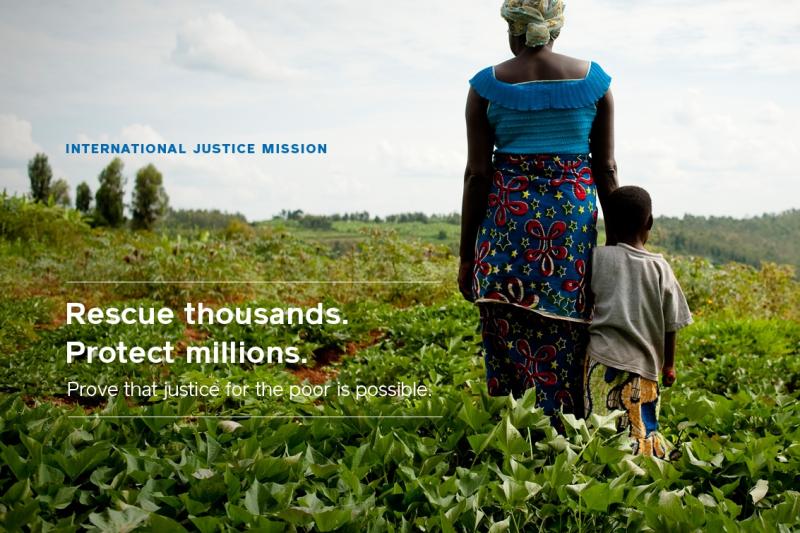
国际公义使命团(International Justice Mission, IJM)正是其中一个深信正义与公义之结合哲学的机构。他们现时在世界各地努力对抗人口贩卖(或称现代奴隶制度),不辞劳苦地调查那些有组织的绑架和招聘;这些绑架和招聘背后其实是对受害者的性剥削,或迫使他们成为奴隷。使命团会透过机构培训的基督徒律师,将可疑的贩卖者带到法庭,希望能中断犯罪网络,让千千万万的受害者重获自由,因为受害者的家国也许没有很重视公义和其实践。国际公义使命团不单希望看见公义的彰显,它亦致力确保受害者能从受压迫的苦况中得释放,身心恢复过来,然后寻求新生活的机遇,包括透过耶稣认识上帝公义的好信息。
当你有机会遇见这些从前的受害者,与他们倾谈,看见他们新的生命,你必然会赞叹上帝的正义和公义如何协作,释放被掳之人,恢复他们的身心灵。正如保罗所言,他们的生命就像活生生的荐书,让世人从他们身上看见上帝公平正义的心肠。
(亚洲公义特会系列之二。聂东尼牧师负责在湾仔葡萄藤教会促进公义事工,是今年十月二十至廿一日亚洲公义特会的主持。特会详情请浏览www.thejusticeconferenceasia.com。本文资料和意念搜集自以下文章,谨此致谢:Old Testament Ethics for the People of God〔CJH Wright〕、Pursuing Justice〔Ken Wytsma〕及Good News About Injustice〔Gary Haugen〕。有关IJM更多事工资讯,请往ijm.org。)
Righteousness and Justice
by Tony Read(Chairman, The Justice Conference Asia)
In Lewis Carroll’s wonderful childen’s story ‘Alice through the looking glass’ we are introduced to two curious characters named Tweedledum and Tweedledee. They are often humorously portrayed in picture books as two rather rotund little boy twins who are almost identical. In the story they are seen as being inseparable and agreeing with each other, but always on the verge of disagreeing. In fact they agree to have a battle with each but never quite get to actually having the battle. When we come to think about Justice and Righteousness it seems to be a similar story. They nearly always appear together in scripture; in many ways they are inseparable and part of the same truth; and yet many Christians would try to set them apart against each other and pit one over the other.
Psalm 33:5 is a beautiful example of the pairing of these two words “The Lord loves righteousness and justice; the earth is full of his unfailing love” because it not only places them together in this couplet but expresses these seemingly rather cold, legal, religious words within the context of love; both the object and the outcome of God’s love in the world. This alone should lead us to see that they are not just about moralistic judgment and good deeds but that they have far reaching consequences.
These two words righteousness and justice form what is technically called a hendiadys – a single complex idea expressed through the use of two words. (Other English examples are ‘health and safety’ and ‘law and order’). The implication of this is that one of the words on its own is not adequate to express the fullness of what is trying to be expressed; and more importantly that trying to separate and draw distinct differences between the two robs them of their complex vitality.
The first word ‘righteousness’ has at its root the idea of straight; something which is fixed, and fully what it is meant to be. It is not so much an abstract expression of an inward moral condition but more a concrete expression of rightness which can be checked by external verification.
The second word ‘justice’ has a much greater legal flavour but is more about putting things right than just pronouncing judgment on what is. In the courtroom scene often used as one of the pictures describing Jesus work of salvation (justice) on the cross we are used to the concept of the judge who not only pronounces the judgment but then leaves his position and comes down from his judgment seat to stand with the accused. He then acts as an advocate to work through the failures and lack of righteousness with compassion and mercy to effect a restorative justice that transforms and reclaims what was previously defective. In scripture the word justice has a much more of this active, positive feel about it than purely judgmental. So in scripture we are instructed to ‘do justice’. Micah 6:8 “He has showed you O man what is good. And what does the Lord require of you? To act justly and to love mercy and to walk humbly with your God”
There is no vying for supremacy between righteousness and justice. One is not the master and the other the servant; one is not the will and the other the action. Righteousness and justice working together are not only a powerful expression of God’s desire for a world restored to his original intention but also a powerful means of bringing about that result through the work of his spirit in the very fabric of the physical world and its people.
One organisation which embodies this philosophy of righteousness and justice working together in a beautiful way is IJM (International Justice Mission). They currently work in many areas of the world to fight against trafficking of people (now often called Modern Day Slavery) by conducting painstaking research and investigation into the organised abduction or recruitment of people for purposes of sexual exploitation or slave labour. They use their own trained christian lawyers to bring suspected traffickers to court in order to break-up criminal networks which are bringing misery to thousands of desperate people in countries where justice is not as highly valued and executed as it should be. Their motivation is not just seeing that justice is done but also ensuring that victims are freed from their oppressive slavery-like situations in order to recover, and pursue opportunities for a new life which includes the good news of God’s righteousness through Jesus.
When you meet and talk to some of these former victims and see their new lives you cannot fail to be impressed at the amazing way God’s righteousness and justice are working together to release and restore that which was held captive. Just as Paul said their lives are living letters expressing God’s heart of justice and righteousness for all to read.
(Tony Read is the Justice Advocate for The Vine Church in Wanchai, the host of The Justice Conference Asia on October 20-21 this year. We sincerely hope that you will join us in the conference this year. For more, please visit www.thejusticeconferenceasia.com. This article is based on information and ideas gratefully gleaned from ‘Old Testament Ethics for the people of God’ by CJH Wright; ’Pursuing Justice’ by Ken Wytsma, and ‘Good news about injustice’ by Gary Haugen. Further information on the work of IJM can be found at ijm.org)